Middle East · Iran · 3 min read
Anardana: Pomegranate in Powder Form
Dried pomegranate seeds, sweet and sour in one, from the Persian fesenjan pot to the curries of northern India.
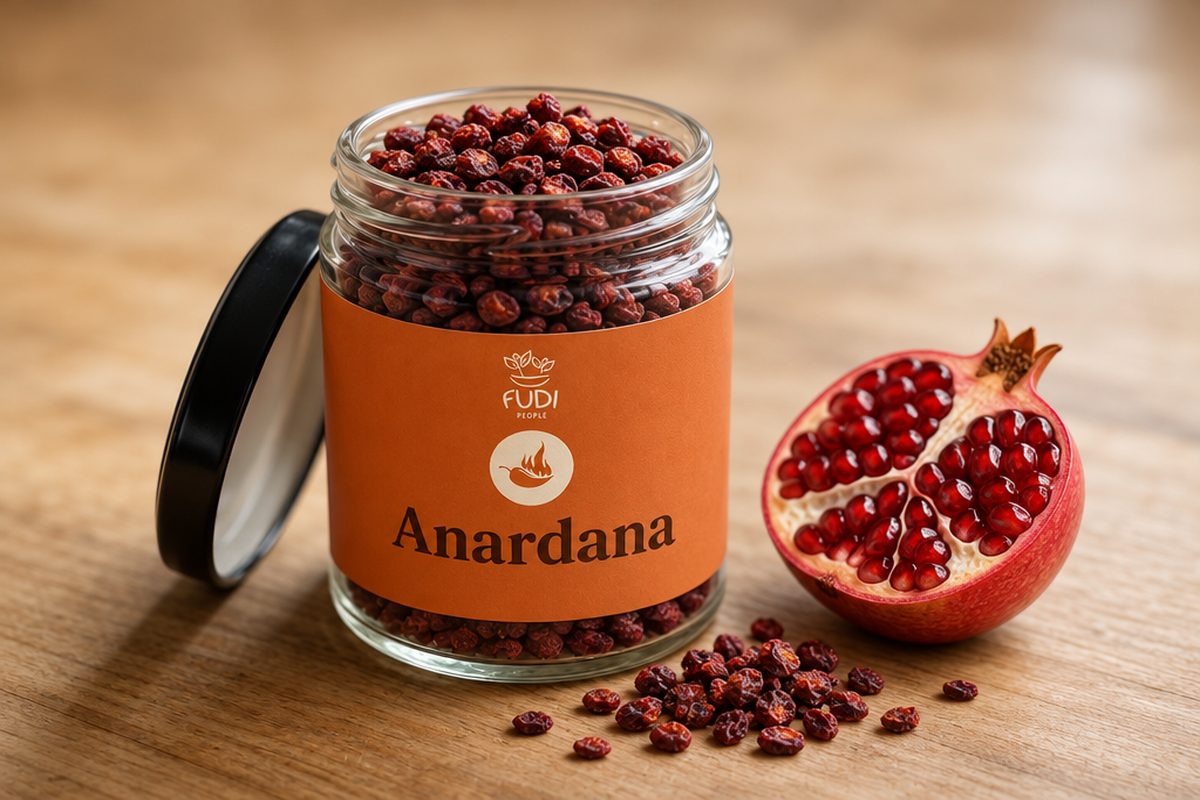
Anardana means "pomegranate seed" in Persian. Dried and sometimes ground, it gives dishes a fruity sourness you cannot get from lemon.
A fruit of fertility
People have grown pomegranates for at least 5,000 years, most likely starting in and around Persia, today's Iran. By the early Bronze Age cultivation had spread across the southern Mediterranean and east to India and China. Its many seeds made it a symbol of fertility in ancient cultures, especially Egypt, where pomegranates appear in tombs and temples. Roman physicians prescribed it for tapeworm, and the Roman cookbook Apicius includes a digestive pomegranate drink said to have been enjoyed by Nero. The dried spice's culinary home remains Persian and Indian cooking, as it has been for thousands of years.
Become a member to keep reading
Join to unlock every story, recipe and origin trail — and get money off the blends.
Written by Kofi, founder of Fudi People.